
Except for Westlife Foodworld (Westlife), a weak 2022-23 (FY23) January-March (fourth quarter, or Q4) quarter performance and a muted near-term outlook led to a downward revision of earnings estimates for quick-service restaurant (QSR) players. Brokerages have slashed estimates by as much as 10 per cent for 2023-24 (FY24) and 2024-25 (FY25). The downward revisions have weighed on the performance of listed players, who have underperformed the market with low single-digit returns over the past month.

Experts say, investors will be better off exiting them at higher levels and investing in stocks of fundamentally sound companies.

Equity benchmark Sensex tanked 372 points on Thursday, tracking losses in index majors L&T, Infosys and TCS amid a negative trend in global markets. The 30-share index ended 372.32 points or 0.62 per cent lower at 59,636.01. Similarly, the NSE Nifty fell 133.85 points or 0.75 per cent to 17,764.80.

'Historically, many chief financial officers have not been comfortable with investing today for indirect value in the future.' 'This reluctance can skew investment allocation to tactical versus strategic outcomes.'

'Invest only in stocks of those companies that deliver on earnings and there is earnings visibility too for the next few quarters.'

Auto companies are now grappling with a slowdown in sales, triggered by pent up demand due to the COVID-led lockdown easing a bit and supply-side issues for raw material.

Since its results, the stock of bottling and beverage distribution company Varun Beverages (VBL) is up 7 per cent on the back of a strong 2022-23 January-March quarter performance, robust outlook, and revision in profit estimates. Given the sharp uptick, it is now part of the trillion-rupee club, with its market capitalisation at Rs 1.01 trillion. The stock is one of the best performers in the consumer space as well as the S&P BSE 200, of which it is a constituent.

Hyundai Motor India (HMIL) raised Rs 8,315 crore from anchor investors on Monday, setting the stage for the country's biggest-ever maiden share sale. The Indian arm of the South Korean carmaker Hyundai Motor Company (HMC) allotted 42.4 million shares to 225 funds at Rs 1,960 apiece, the higher end of its price band. Among the investors receiving allotments were the Singapore government's sovereign wealth fund (GIC), New World Fund, and Fidelity.

People are availing far more of certain kinds of unsecured loans than was the case before the pandemic. Bank lending for buying consumer durables and funding of credit cards and other personal loans have risen by Rs 6.9 trillion between August 2019 and August 2023, shows a Business Standard analysis of data from the Reserve Bank of India (RBI). These loans are typically unsecured, which means they are provided without collateral.

Irregular rainfall and a pick-up in commodity costs are expected to weigh on the demand and margins of fast-moving consumer goods (FMCG) companies. Most companies reported a sharp expansion in gross margins in the April-June quarter (first quarter, or Q1) of 2023-24 (FY24), given the lower prices of key raw materials and earlier price hikes. Furthermore, there were expectations that cost savings being passed on could reflect in volume growth going forward. However, these hopes could be dashed if demand recovery, especially in the rural segment, stalls, and gains on the raw material front start to recede.

Larger listed domestic-focused tyre companies have underperformed the benchmarks in the last three months but exporter Balkrishna Industries has bucked the trend. The company, which exports off-highway tyres, has generated 43 per cent returns in this time compared to MRF and Apollo Tyres, which are down 5-10 per cent. In addition to better-than-expected performance in the March quarter, exports and market share gains have helped Balkrishna pull ahead of peers.

New Delhi-based pharmaceutical major Mankind Pharma is poised to take pole position in women's health portfolio in the India Pharma Market (IPM) after completing the Rs 13,630 crore deal to acquire Bharat Serums and Vaccines (BSV), senior company officials said. The deal potentially opens doors for Mankind Pharma to the overseas markets, which currently draws 92 per cent of its revenues from India. The combined entity will draw around 13 per cent revenues from the international market, with the remaining coming from the domestic market.

Air quality index (AQI) soared past 350 level in parts of Delhi on Thursday and experts cautioned that as weather turns colder it may breach the 400-mark ceiling and enter the 'severe' zone soon, notwithstanding the incidents of stubble burnings which have nosedived from 17,529 in 2020 to 4,262 this year.

The June quarter is usually considered as a seasonally strong period for the IT sector.

Stock markets will be driven by domestic inflation data, ongoing quarterly earnings from corporates and global trends this week, analysts said. News flows around the general election would also be tracked by investors, market experts said.

'Will President Dissanayake calibrate his foreign policy taking into account India's immediate security concerns? We need to watch.'

ITC was the top loser in the Sensex pack, shedding nearly 3 per cent, followed by Bajaj Finance, Kotak Bank, Bharti Airtel and Reliance Industries. Nifty fell 43.35 points to 17,324.90.

Drug shortages in the US are at an all-time high, and price erosion has stabilised, which could benefit Indian pharmaceutical (pharma) companies with a US focus, according to analysts. Nuvama Research analysts said that US price erosion seems to have normalised to its old levels of 6-8 per cent and volumes are picking up with easing of inventory. Similarly, an ICICIdirect analyst noted: "Price erosion intensity has now moderated to a single digit and is expected to tone down a

The March quarter (Q4) of the ongoing financial year (FY23) may see cement companies report better financial numbers as input costs ease, pricing action resumes, and cement demand remains firm. While companies have been cautiously optimistic about their outlook, analysts and sector experts remain bullish. In its latest report on the cement sector, brokerage IDBI Capital said that it expected earnings before interest, tax, depreciation, and amortisation (Ebitda) per tonne for cement companies to improve by Rs 200-300 sequentially in Q4.

Auto Expo 2023 may not trigger a fresh rally in automobile stocks, say analysts, as this year's edition lacks participation from major listed players. It is also owing to the focus on electric vehicles (EVs), a segment where four-wheelers have minuscule market share. "In the passenger vehicles (PV) segment, Maruti Suzuki India and Tata Motors are the only listed players.

After being sworn in as the 47th president of the United States, Trump started his inaugural address with a sentence that echoed Modi's coinage some years ago, notes Modi biographer Nilanjan Mukhopadhyay.

The results of Indian IT services players in the just-concluded fourth quarter of 2021-22 are expected to reveal continuing growth momentum as demand surges on the back of digital transformations and the cloud shift, but analysts anticipate margins to be under pressure due to supply challenges. Analysts covering the sector expect revenue commentary should be strong despite the Russia-Ukraine conflict and inflation. Top-line growth will be driven by broad-based demand with a strong uptick for cloud, digital, cybersecurity, data analytics, and artificial intelligence, among other services.

Stock markets would take cues from the biggest event of the week -- the US Fed interest rate decision, besides tracking the trends in global markets and trading activity of foreign investors, analysts said. Last week, a heavy decline in smallcap, midcap firms, foreign fund outflows and elevated crude oil prices in the international market dented investors' sentiments. Experts said equity markets may remain volatile in the near-term amid a host of global central bank's monetary policy decisions lined up during the week.

The BJP may win more seats in the February 5 assembly election, but not enough to trump AAP, notes Ramesh Menon.

The Adani group, buoyed by a sharp recovery in its share prices over the past year, is set to embark on a series of roadshows this week to raise up to $4 billion (approximately Rs 33,254 crore) through equity and refinancing of older debt, according to banking sources. The roadshows, scheduled to take place in major cities, will inform investors about the group's investment plans across renewable energy, petrochemicals, and infrastructure development.

In the absence of major domestic events, equity markets will be driven by global trends, foreign fund flows and movement in the Brent crude oil, analysts said. The major global events this week are the European Central Bank interest rate decision and China's inflation rate, they added. "Indian equity markets are outperforming most of their global peers and trying to show resilience despite weak global cues.

The stock of United Spirits, the country's largest liquor company by market capitalisation (mcap), has gained 11 per cent over the past week on double-digit growth guidance, rising premiumisation trend, operationally in-line performance in the March (Q4FY24) quarter and a rally in consumer stocks. The revenue growth of the company came in at 7 per cent year-on-year (Y-o-Y) mirroring the growth of the prestige and above (P&A) segment. This segment comprising premium brands accounts for 88 per cent of the revenues.

From the Sensex pack, State Bank of India, ICICI Bank, IndusInd Bank, Axis Bank, Kotak Mahindra Bank, HDFC Bank, Reliance Industries were among the major laggards. Bucking the trend, auto stocks Tata Motors and Mahindra & Mahindra closed with gains.

From the Sensex pack, Tata Motors slumped over 7 per cent. Adani Ports, Tata Steel, SBI, Power Grid, JSW Steel and Maruti were the other big laggards. However, Hindustan Unilever and Nestle ended in positive territory.

Had you invested Rs 10,000 each in JSW Steel, Titan Company and Bajaj Finance 20 years ago, when they were just penny stocks (trading below Rs 10), you would have become a millionaire by now.

India's largest listed pharmaceutical (pharma) company - Sun Pharmaceutical Industries (Sun Pharma) - is expected to maintain its outperformance vis--vis the sector's, as its multiple bets on specialty products, improving product mix, recent acquisitions, and branded business are finding favour with brokerages. While it has gained 7 per cent over the past year, the Nifty Pharma Index is down 13.6 per cent. Its outperformance over two years has been fairly evident, with the market leader gaining 66 per cent to Nifty Pharma's minus 1.4 per cent.

Fundraising through the issuance of shares to qualified institutional investors has seen hectic activity in the first half of the current fiscal year (FY24), with 20 companies mobilising over Rs 18,400 crore, more than four-fold from the year-ago period, on positive investors' sentiments. Moreover, the robust trend of Qualified Institutional Placements (QIPs) in the first half of the fiscal year 2023-24 is expected to persist throughout the second half of the year too, Sanjay Moorjani, Research Analyst at SAMCO Securities, told PTI. Prashant Rao, director and head of equity capital markets, Anand Rathi Investment Banking, said that market and investor sentiments play an important role for these issuances.

Stock markets would be driven by global trends and foreign investors' trading activity in the holiday-shortened week, analysts said adding that key equity indices may face volatile trends amid the monthly derivatives expiry on Thursday. This week markets will have just three trading sessions. Equity markets will remain closed on Monday for Holi and on Friday for Good Friday. "This week will be shorter due to market closure on both Monday for Holi and Friday for Good Friday.

'Expectations are high regarding the change in LTCG with respect to equity investments.'
In a data-packed week, the domestic macroeconomic figures -- industrial production and inflation numbers -- along with global trends would dictate trends in the equity market this week, analysts said. According to experts, markets may face volatile trends due to high valuations. Equity benchmark indices Sensex and Nifty hit their fresh record peaks on Thursday. Besides, trading activity of foreign investors, movement of global oil benchmark Brent crude and rupee-dollar trend would also influence trading in equities.
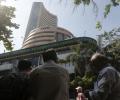
Among the Sensex firms, Tech Mahindra, Tata Motors, Bharti Airtel, Wipro, Bajaj Finserv, HCL Technologies, Bajaj Finance, Larsen & Toubro, Mahindra & Mahindra and UltraTech Cement were the biggest laggards. IndusInd Bank, Power Grid, HDFC Bank, ICICI Bank, NTPC, Reliance Industries, HDFC and Tata Steel were the prominent winners.

The US Fed interest rate decision, domestic inflation data and global trends would be key driving factors in dictating movement in the market this week, as the Lok Sabha elections outcome and the RBI policy decision are behind us, analysts said. The past week was a roller-coaster ride for investors as markets swung sharply in both directions before closing with strong gains.

The court of additional sessions judge R M Asodiya reserved its order on Hindustani's bail plea for April 13, additional public prosecutor Moham Gohel said.

Seven consecutive sessions of decline in the equity market has eroded the wealth of investors by a whopping Rs 10.42 lakh crore and the benchmark Sensex has tumbled more than 2,000 points during this period. Concerns over more rate hikes by developed economies, weak global equity markets and fresh foreign fund outflows from the domestic market have dented investor sentiments. On Monday, the BSE Sensex dropped 175.58 points or 0.30 per cent to end at 59,288.35 points, marking a decline for seven straight trading sessions.
Global trends, macroeconomic data announcements and the start of the earnings season would be the major drivers for the equity markets in a holiday-shortened week, analysts said. Equity markets will remain closed on Thursday for Eid-Ul-Fitr. Trading activity of foreign investors, rupee-dollar trends and crude oil prices would also guide trends in markets.
